The Different Types of Paranormal Investigators: Exploring the World Beyond the Veil
From scientific researchers to spiritual sensitives, paranormal investigators come from all walks of life. Each brings a unique approach to understanding — and sometimes healing — the unseen energies that surround us.
10/2/20254 min read
Introduction
Throughout history, humankind has sought to understand what lies beyond the veil of the physical world. While many dismiss paranormal activity as imagination or coincidence, countless investigators dedicate their lives to exploring these mysteries. But not all paranormal investigators are alike. They come from diverse backgrounds, use different methods, and hold unique beliefs about what they’re encountering.
Understanding these different types can help us appreciate how science, spirituality, and energy work can coexist — and even complement each other — in the pursuit of truth.
1. The Scientific Investigators
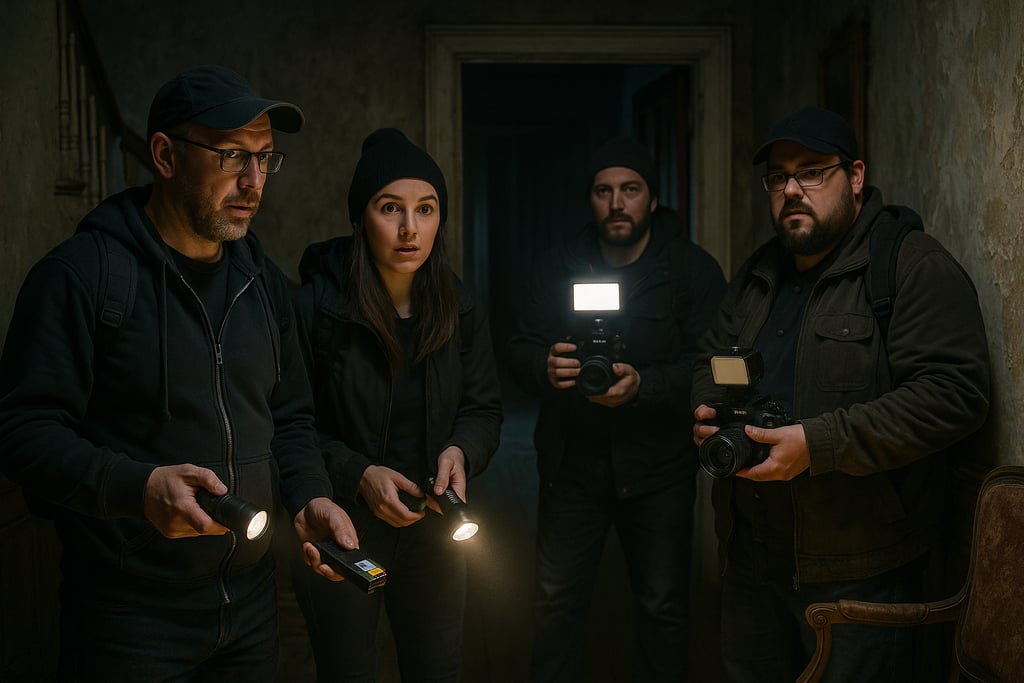
These are the technical minds of the paranormal field. They rely on measurable data and evidence, using tools such as EMF meters, thermal cameras, EVP recorders, and infrared imaging to detect environmental changes. Their goal is to analyze, not assume — to find out whether what’s happening has a rational explanation or something beyond science.
They bring credibility and balance to investigations, often ruling out natural causes like faulty wiring, infrasound, or drafts before concluding that an event may be paranormal in nature.
Their motto: “Trust the data.”
2. The Psychic or Spiritual Investigators
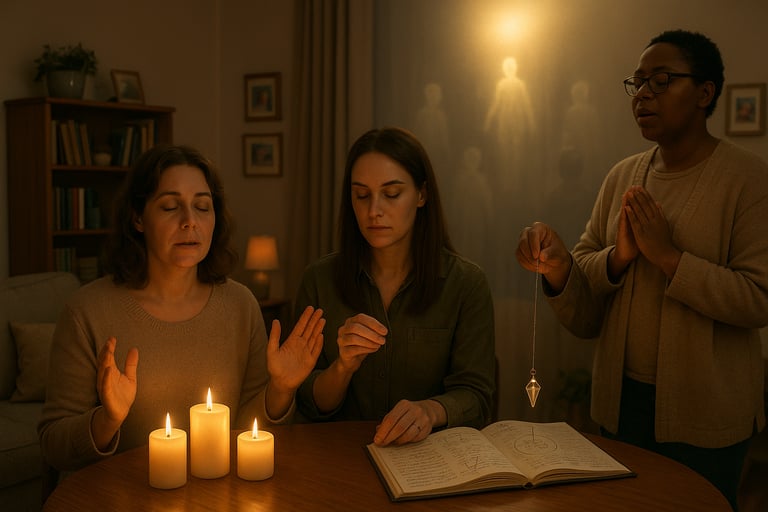
Unlike the scientifically minded, spiritual investigators rely on intuition, empathy, and extrasensory perception. Many are mediums, clairvoyants, or empaths who can sense or communicate with spirits directly. They read the energy of a space, feeling the emotions or intentions of the entities present.
Their goal is not just to prove that something exists, but to understand and help — to identify who the spirit is, why it remains earthbound, and how it can be guided toward peace.
Their motto: “Feel the energy, and listen to what it tells you.”
3. The Hybrid Teams
Many modern investigators combine both approaches, blending science and spirituality. A psychic might identify an area of high activity, while the technical team gathers readings to confirm it. This partnership creates a more complete picture of what’s happening — the energetic and physical evidence together.
Such teams recognize that neither science nor spirituality alone holds all the answers; truth often lies in the intersection between the two.
Their motto: “When energy and evidence align, we find understanding.”
4. The Historical Researchers
Every haunting has a story, and historical researchers are the storytellers of the paranormal world. They dive into archives, property records, and old newspapers to uncover who lived, suffered, or died in a particular place.
By revealing these hidden histories, they not only explain the nature of a haunting but also bring recognition and compassion to forgotten souls. Often, simply uncovering the truth can bring peace to both the living and the dead.
Their motto: “To understand the haunting, first understand the history.”
5. The Energy Healers
Some investigators focus less on discovery and more on resolution. Energy healers use practices like Reiki, smudging, sound healing, or prayer to clear heavy or stagnant energy from a space.
Their goal is to restore harmony — not to confront, but to uplift. They see negative energy as something that can be transformed through compassion, intention, and light.
Their motto: “Where light enters, darkness dissolves.”
6. The Demonologists and Dark Entity Specialists
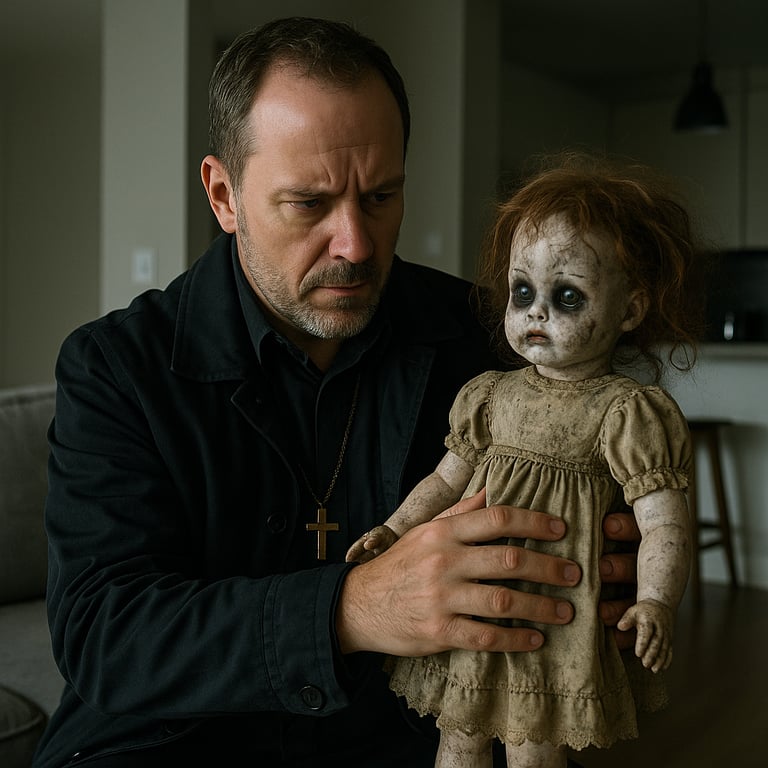
This group deals with the most challenging cases — those involving darker, resistant, or malevolent entities. They often work from a religious or spiritual framework and are trained in forms of protection and exorcism.
Their work requires deep spiritual discipline, courage, and respect for the unseen forces they encounter. They distinguish between confused human spirits and non-human energies that may seek to feed on fear or chaos.
Their motto: “Light is strongest when faced with the deepest shadow.”
7. The Media Investigators
From documentaries to YouTube channels, these are the public faces of modern paranormal investigation. While entertainment is part of their work, many are passionate researchers who use their platforms to raise awareness, educate viewers, and inspire curiosity about the unseen world.
Their motto: “Bring the mystery to light — and let others decide.”
8. The Parapsychologists
At the academic end of the spectrum are parapsychologists — researchers who study psychic and paranormal phenomena under controlled conditions. They examine telepathy, psychokinesis, near-death experiences, and hauntings, bridging the gap between science and consciousness studies.
Though often skeptical, they keep an open mind about the unexplained, seeing it as part of humanity’s ongoing exploration of the mind and spirit.
Their motto: “Study the unknown to better understand the known.”
How about Paranormal Solutions?
In which category would we find the services of paranormal solutions? Although the word demonologist sounds a bit serious to me, the specialty lies indeed in dealing with the strong dark entities. Those who are not easily impressed and show a strong resistance to the light. Although the services has a broad range and can deal with many matters, from gentle lost unborn souls, to confused old inhabitants of houses - right to the demon that presents itself before you.
Conclusion
Is one category better then the other? Of course. Only one can be the best. Do we even need to ask?
No seriously, each brings his own part to the scene. It's unique view and specialty sheds a different light upon this mysterious unseen world. It is foolish to say that one is wrong and the is other right. There is truth to be found in all the words of those who investigate this realm.
The field of paranormal investigation is as diverse as the phenomena it seeks to understand. Some rely on instruments, others on intuition, and many on a blend of both. What unites them is curiosity — the drive to uncover truth, bring peace to restless energies, and expand our understanding of what it means to exist beyond the physical world.
In the end, all investigators — whether scientific or spiritual — are explorers of the unseen, walking between light and shadow in search of understanding.